Troops that Failed to Join a Battle on a Technicality
It’s no secret that I’m a huge history buff. I studied anthropology and archaeology in college, and for a good chunk of my early life, thought it would become my profession. It didn’t, but that didn’t dampen my passion for history. Everything I write, even fantasy, has elements that are drawn directly from the historical record, and oftentimes, the facts are more fantastical than anything we could come up with on our own.
Medieval slave soldiers who became an elite class of warriors and eventually took over the empire, for example. Stuff like that.
I spend a ridiculous chunk of my time checking whether something I made up could actually have happened. Sometimes the answer is no and I have to fix it. Occasionally, however, the answer is yes, and worse. Those moments fill me with absolute glee.
While writing Gohar Rises, I went looking for instances of soldiers not engaging in battle on a technicality—a rule, a date, a piece of paper with the wrong name on it—assuming I’d find very little. Instead, I found nine absolutely wild examples of armies that could have acted but didn’t, because a detail kept them from doing anything. At least nine times in history, an army could have won a battle, but just stood in a field and watched it instead.
Craziest part? Most of these instances didn’t happen because of cowardice. It wasn’t fear that kept them from acting, it was that something wasn’t exactly according to protocol. (Although one could argue, I suppose, that it’s all because of fear.)
So here are five of the nine. Message me if you want to know about the others, you history freak.
The Procedure Wasn’t Proper
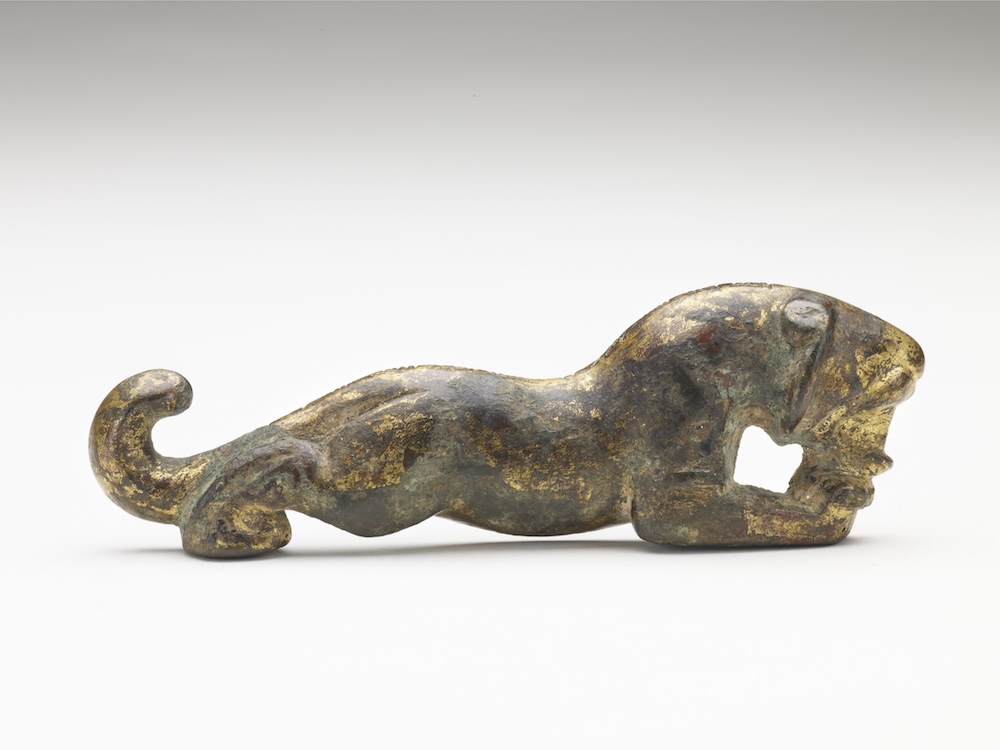
In 257 BCE, when the Qin Army state attacked the Zhao state, General Jin Bi was ordered by King Anxi of Wei to lead troops to rescue Zhao. In order to prove an order was real, the king and the general split a bronze token in two and each kept half. The entire purpose was to make it impossible for anyone to pick up a command he hadn’t been given. General Jin Bi received the king’s half and an order to give command of a hundred thousand men to Lord Xinling. The pieces matched perfectly and the king’s half was no doubt genuine, but Jin Bi still refused. Why? Because this sort of thing was just not done: one carriage, one man, no proper procedure.
They had to kill Jin Bi with an iron mallet (was the iron mallet necessary? Who knows) so that the army could march, and the siege of Handan was broken.
He Sent the Wrong Letterhead
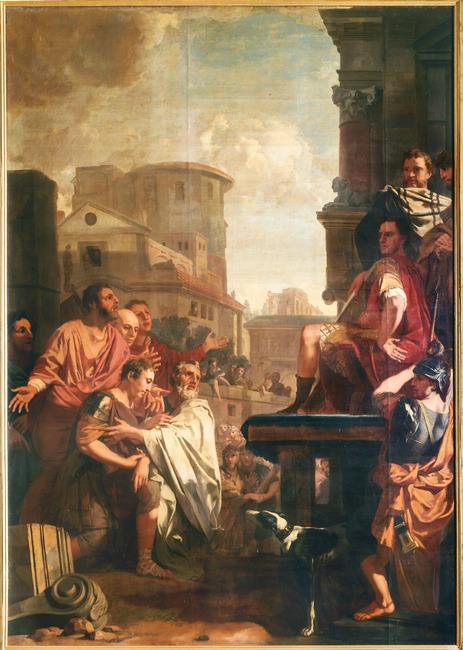
The commander of a Roman army in 211 BCE Spain was killed, and the surviving troops elected an equestrian, L. Marcius Septimus, to command. His dispatch reached Rome and the Senate’s complaint was not about his competence. No, it was that the letterhead was wrong.
The superscription of the letter was “The propraetor to the senate,” … though the imperium had not been conferred upon him by an order of the people, nor with the sanction of the senate.1
Basically, the Senate declared that a commander chosen by his own troops is an evil precedent even when he is the only commander left alive. Marcius had signed himself propraetor, and nobody had given him the right to. So instead, they sent out a twenty-five-year-old who had never held high office but who had been properly elected, and Marcius served under him, without rank.
Rome ended up winning the war, but not because of that move, that’s for sure.

It Doesn’t Matter if He Won
Romans again, 325 BCE. The dictator Papirius Cursor (coolest name ever) left his army in Samnium to go back to Rome and retake the auspices, ordering his second-in-command, Fabius, not to fight while he was gone. Fabius fought anyway, and won overwhelmingly. Papirius demanded his execution, and only the tribunes, the people, and Fabius’s own father talking him down saved his life. Rome won the war, but it didn’t matter: a victory won without authority is still a capital offense.
Weeks later a foraging party was cut off and killed, and the Romans believed the replacement commander could have saved them, if he hadn’t been too scared of the consequences to take command. Livy says the soldiers feared their own commander’s displeasure more than they feared the enemy.
That’s the part that’s most jarring: The rule didn’t kill anyone the day it was enforced. It killed later, quietly, somewhere nobody was watching, by making the next man in command too careful to act.
The Moon Wasn’t Full
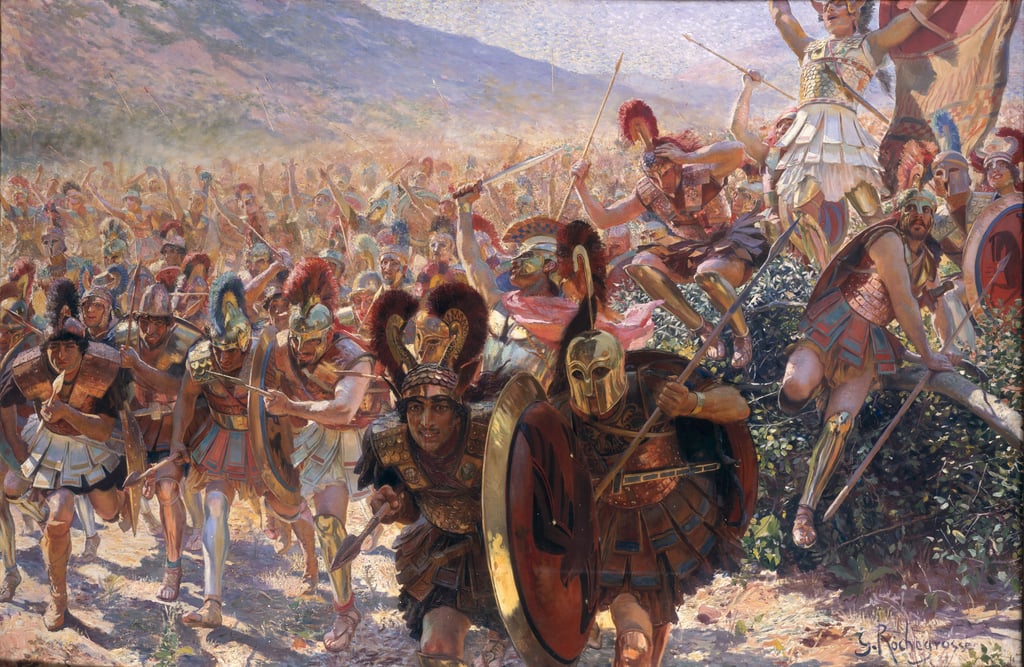
Most history buffs have heard of the Battle of Marathon between the Greeks of Athens and the Persians in 490 BCE. But most folks don’t know that Athens sent a runner to Sparta begging for help against the Persians at Marathon. The Spartans agreed, then explained they couldn’t march, because it was the ninth day of the rising month and the law forbade it until the moon was full. 2
That’s the weirdest part—they were ready to help. They just couldn’t, because, well, the moon.
Two thousand of them crossed a hundred and thirty miles in three days the second the law allowed, arrived after the battle was over, told the Athenians they’d done a great job, and went home. Athens had won without them and kept the victory for itself, making Marathon the founding legend of a single city for the next two hundred years.
He Wasn’t Allowed to Improvise
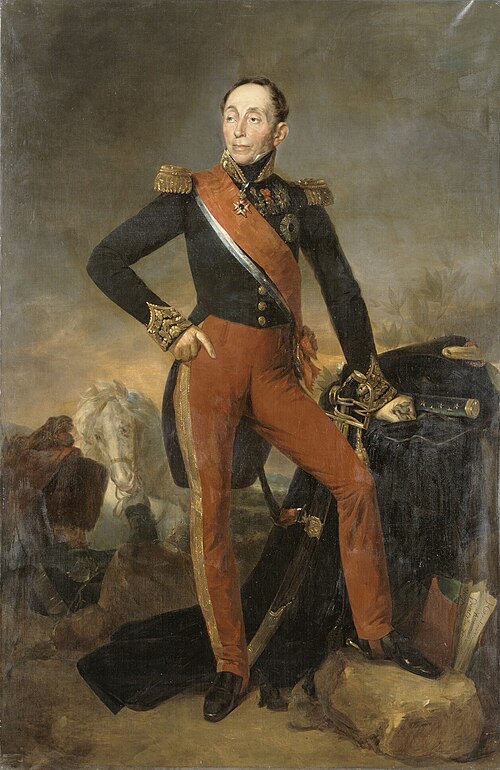
On June 18, 1815, Marshal Grouchy (unlike Papirius Cursor, Grouchy is a most unfortunate name) had 33,000 infantry and 80 guns, roughly a third of Napoleon’s field army, and written orders to march on Wavre and engage the Prussians.
At 11:30 on the morning of Waterloo, he and his corps commanders heard the guns open ten miles west, and his officers begged him to march toward it. He refused, and the second of his two recorded reasons cited Marshal Ney’s earlier rebuke for disobeying orders. Grouchy insisted that he would not repeat that mistake by abandoning the mission he had been assigned.
A third of an army stood in a field for an afternoon while the campaign was lost within earshot, because the paper in the commander’s hand named a different task.
He went on to Wavre and won his own small battle there, and learned two days later that Napoleon had lost the war in the meantime. People have been arguing about whether he could have changed history for two hundred years.
You’ll Know When You Read It
The reason scenes like these get called “unrealistic” in novels is because fiction has trained us to expect someone to step up and act. There’s always a captain who says to hell with it and saves the day, and we’ve seen it so many times it feels like a law of nature.
Real people don’t always do that. History is full of men standing in fields with the right instincts and the wrong piece of paper, choosing correctly, and still being wrong.
That’s harder to write and much harder to forgive, but it’s actually what happens.
Anyway, remember all this whenever you’re at a cocktail party with nothing whatsoever to say…
Comments (0)