My Author’s Journey: Part Two
Read Part One first.
The Noble Pirates was my first real lesson as an author, but it certainly wasn’t my last. Instead of letting it discourage me from writing, however, I sat down and wrote a dark historical fantasy that had been floating around in my brain since high school. It was mostly a personal project and I didn’t really intend to try and get it published. After all, if agents weren’t willing to look at a fun time travel romance about pirates, why would they bother with a dark story about a Muslim assassin in Jerusalem during the Crusades?
After finishing it, I asked an editor/author friend of mine at a publishing house for whom we both did freelance editing if she would do some content and copy edits before I likely self-published it. She read it, loved it, and convinced me to submit it to said publisher. Now, this press publishes mostly (these days, I think even exclusively) romance, and my story is a far cry from romance. In the story, there is a budding friendship that hints at possible future romance, but that’s it. Still, I decided to go ahead anyway, because why not? I had nothing to lose, and I had a pre-existing relationship with the publisher as a freelancer. I also submitted it to other indie presses, including Bloomsbury’s ebook imprint at the time. To my surprise, Bloomsbury, my friend’s publisher, and a couple small presses offered me contracts.
After deliberating for a while, I took the contract with the first (mostly romance) publishing house. At this point you’re probably wondering, Did you try and get an agent if you had offers? And the answer is… sort of. I sent off a few queries, didn’t get any interest, and decided to handle it myself since I have a law degree and knew how to read contracts.

As soon as it was acquired, the revision requests began to roll in: I needed to make the story more Young Adult, less Adult. Also—and most importantly—I was told to add romance. At first I thought it wouldn’t be a big deal; I could add a little more romantic tension between the characters and make them seem a bit younger. But it was never enough. By the time the story had “enough” YA romance, it was no longer the story I’d sought to tell. In fact, all of the cutesy romance stuff seemed wildly out of place alongside the dark themes of (often brutal) war during the Crusades.
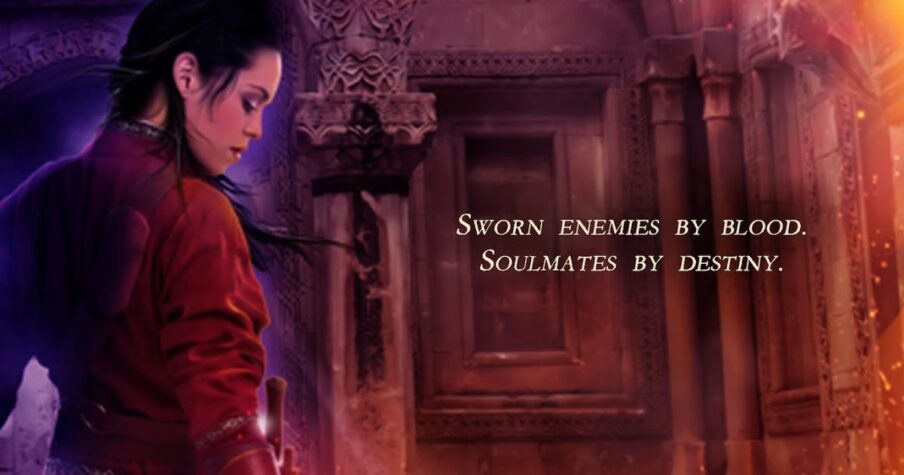
The book was marketed as a YA fantasy romance, and the cover had a white girl (mind you, my MC is an Arab Muslim) against a fiery pink background. And ooooooh boy, did it get a bad reception. Let me be clear: I absolutely don’t blame any reader who was upset if they picked up my book thinking they were going to read something light and fluffy but instead, within the first few pages, was hit with a woman being burned at the stake for witchcraft while her daughter was raped.

The book floundered, sticking out like a sore thumb amidst the light-hearted YA romances, and it soon became the bane of my existence. (I won’t go into the details here, but I know for a fact the publisher wished they had never contracted my book). Truth is, I completely agree. The book did not belong with them, and its failure was in large part because it was a dark historical fantasy meant for an adult audience and had been forced to fit in the wrong box simply because the main character was seventeen. Needless to say, it made next to no money. Receiving my royalties was a monthly humiliation, a reminder that I’d failed at doing this whole “professional author” thing, yet again.
Even so, I was not completely demoralized—yet. I was determined to write something that would sell, once and for all: my next project was very much a contemporary YA romance, complete with sexy shapeshifters from a lost ancient civilization. Writing it was not fun to me. The parts I enjoyed were the human interactions and the historical research, but the plot itself was drudgery. It wasn’t particularly unique or surprising; it very much followed the formula I had seen repeated ad nauseam in current bestsellers.
Finally done with it, I began querying. And within a week, I had eight agents requesting to read the full manuscript, sending me enthusiastic emails about how much they loved what they’d seen so far. Two of these agents asked for a R&R (revise and resubmit), saying they would absolutely take it if… I amped up the romance and made it less “history heavy.”
It was then that it finally clicked for me: I didn’t want this. Oh, sure, I wanted to get a story out in the world and have it actually get read, but not this story. What satisfaction was there in having my name associated with a book I didn’t even like? I’d been there, done that. And I wasn’t doing it for the money, either—to me, art is never about money. Once art becomes all about making money, it risks losing its soul.
So I walked away. And I didn’t seriously write fiction again for almost another ten years.
(The manuscript, by the way, had the gall to be a finalist in the Writers League of Texas Manuscript Competition in the YA category. Because of course the one story I’m not proud of is the one that nearly wins awards.)

***
Comments (0)