The Real Inspiration behind Manzakar
To anyone who doesn’t know: I am the daughter of Syrian immigrants. While I didn’t realize this when I wrote it, Manzakar is, ultimately, an allegory of the Arab American experience. In fact, in many ways it encapsulates the experience of many first-generation Americans whose families came from the global south.
On the surface, I loosely drew inspiration from the Mamluks, slave-soldiers of the medieval Islamic world. I am descended of a Mamluk sultan on my mother’s side and the medieval SWANA region has always captivated me. Despite the “fun” spirit of the book—there’s magic, queer relationships, and humor—the themes of oppression, resistance, and hope are heavy hitting. The story Manzakar tells is that of the Arab American: it depicts the internal conflict so many Arabs who were raised in the United States grapple with, watching the country they’ve come to call home continuously attack their land of origin.
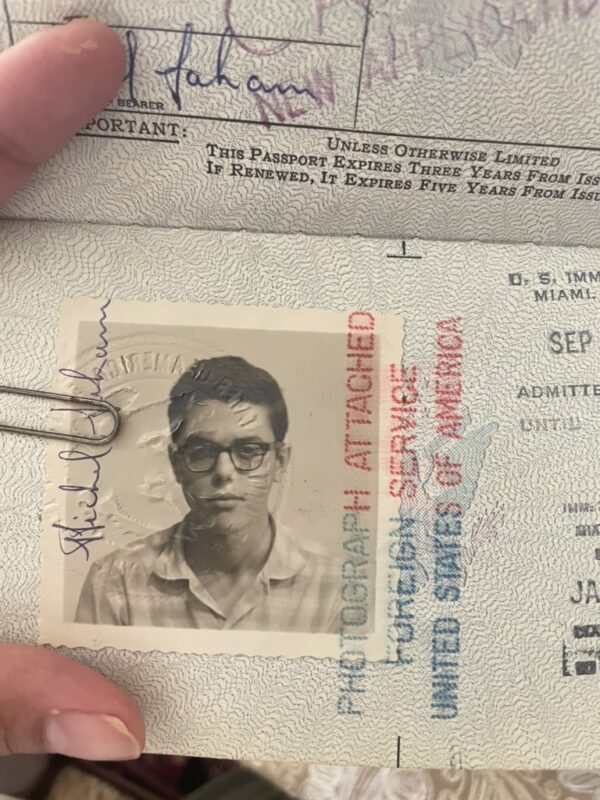
Some background: My Syrian Christian father’s family came to the Americas in the first wave of Arab immigrants, and my Syrian Muslim mother in the second. My father, while not raised in the US, was born here—my grandparents snuck in from Haiti for his birth. He came to this country at sixteen to begin university in Florida. He was drafted into the US Army in the 70s, after he’d attended medical school. I was born on an Army base in Texas. My dad served for seven years, and in those years, became quite patriotic. Throughout my childhood, I remember him reciting the Declaration of Independence from memory, pride shining in his face.
His consternation when the Gulf War began was palpable, and not without reason. Arab Americans faced overt harassment; I had just begun middle school and spent much of my first year afraid to go to school. Unfortunately, it only increased with time. As we all know, Arabs have long been vilified by the west—the Arab world has resources the west wants, after all, not least of which is oil— and animosity toward Arabs reached a fever pitch with the Iraq War and, ultimately, 9/11.
My father struggled between his faith in America’s founding ideals and the things America was doing to the rest of the world his whole life. I don’t think his experience is unique, either. His passing in 2022 galvanized me to write Manzakar. I didn’t know what drove me to write the story at the time, and I didn’t really pour myself into it until late 2023 and early 2024, when the genocide of the Palestinians became apparent. Manzakar became more than a passion project. It became something I absolutely needed to write.
Manzakar asks, what does one do when simply existing in the world makes you complicit in great evils?
My childhood summers were split between Syria and Haiti, the places of my Syrian parents’ births and upbringings. I witnessed how two vibrant, rich cultures were decimated by colonialism. I internalized how they continued to fight, flickering defiantly in the face of western imperialism. I channeled all of my experiences and the trauma of my ancestors into this story.
The Slave-Soldier Series can resonate with anyone who is American but isn’t treated as such—because of skin color, religion, or country of origin. It’s for any American who is torn between two worlds, the world of their parents and the world of their peers, and still somehow doesn’t quite belong to either. At its core, however, it’s a story told through Arab American eyes: Many Arab Americans grow up believing in what this country was meant to stand for, yet ultimately feel betrayed and horrified by its actions in the Arab world and even against us, though we are Americans. Some of us still refuse to see the truth, like several Manzakars in the story, and fight blindly for our king. We are “white,” we insist, even as we are treated as “brown.”
Arabs are the invisible people, depicted as savages in the media but hardly acknowledged anywhere else, despite our vast contributions to western culture and society. Like the Gohari who become Manzakars in the book, our histories are erased and re-written, our lands taken, our voices silenced. The empire trains us to fight and die for it, promising hollow rewards for our complicity in the destruction of our people.
Manzakar is subtle enough to just be a fun ride for those who’d rather not dig too deeply—while still being a call to arms for those who do.
Comments (0)